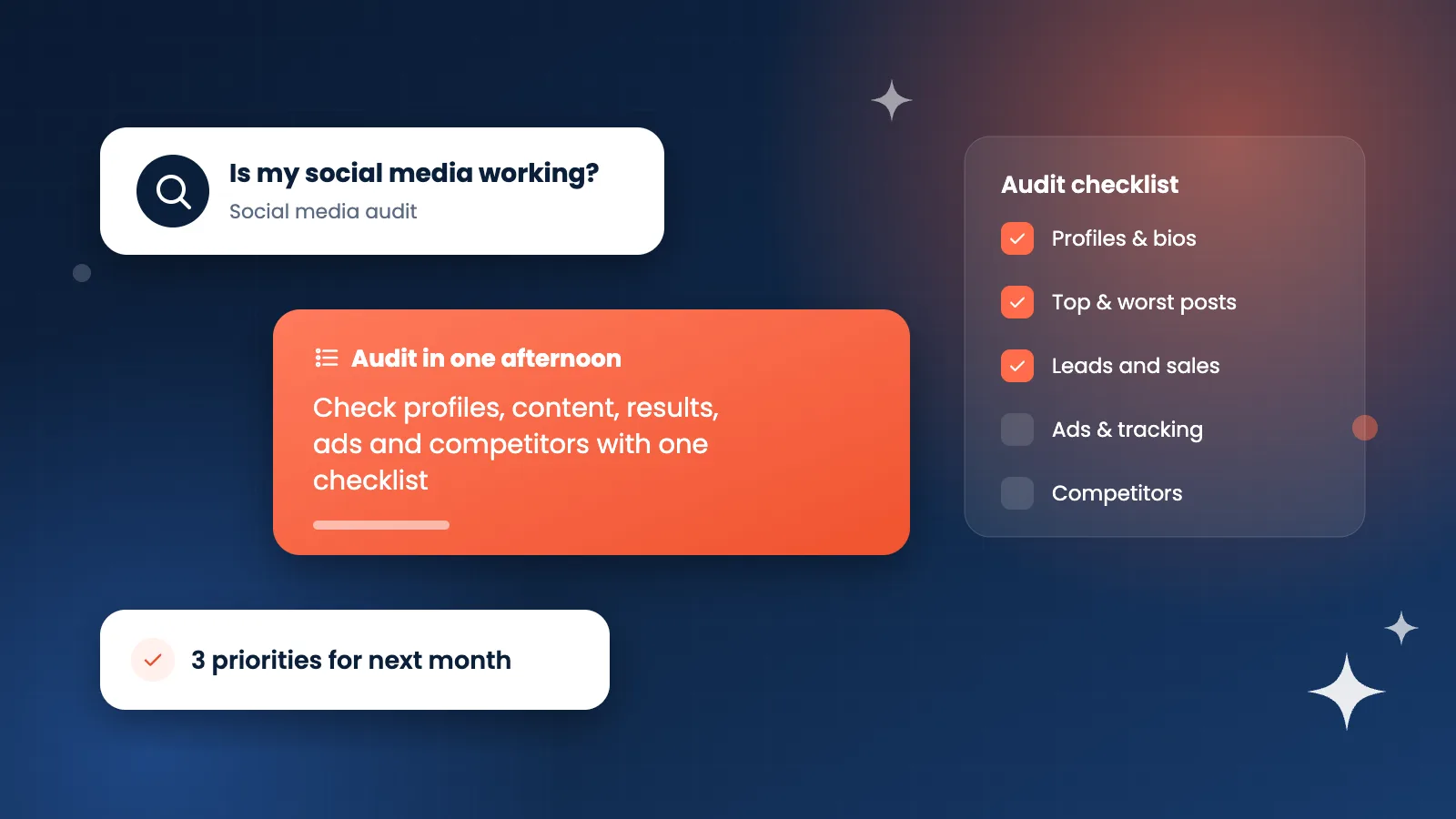
A social media audit is a simple health check of your accounts: what’s working, what isn’t and what to fix first. Most businesses post for months without ever stepping back to look at the results. An audit takes an afternoon and usually reveals a few quick wins that make a real difference.
Here’s the exact process I use when a new client asks me to review their social media, plus a checklist you can copy.
What is a social media audit?
It’s a structured review of every account your business uses. You look at your profiles, your content, your audience, your results and your competitors, then turn what you find into a short action plan. Do one now, and repeat it every three to six months.
Step 1: List every account
Start with a simple spreadsheet. List every platform, the handle, who has the login and when it was last active. You’ll often find forgotten pages, old accounts or profiles managed by ex-employees. Merge or close the ones you don’t need, and make sure the business owns all logins and ad accounts.
Step 2: Check each profile
For every active profile, check:
- Profile photo and cover image are current and consistent.
- The bio clearly says what you do, who you help and where.
- Contact details, website link and booking or WhatsApp link work.
- Business category and location are correct.
- Highlights or pinned posts show your best content and offers.
Step 3: Review your content
Look at the last 90 days of posts. Native insights, such as Meta Business Suite for Facebook and Instagram, make this easy. Then note:
| Question | What to look for |
|---|---|
| What were the 5 best posts? | Format, topic, hook, length |
| What were the 5 worst posts? | Patterns to stop doing |
| How often did you post? | Gaps or bursts |
| Which formats worked best? | Reels, carousels, images, Stories |
| Does it look consistent? | Colours, fonts, tone of voice |
Usually, a clear pattern appears quickly. For example, Reels with faces outperform graphics, or helpful tips beat promotional posts.
Step 4: Measure real business results
This is the part most audits skip. Followers and likes matter less than:
- Website clicks from social media (check Google Analytics).
- Enquiries, calls and WhatsApp messages from social.
- Sales or bookings you can trace back to social.
- How quickly you reply to messages and comments.
If you can’t measure these, fixing tracking becomes your first priority.
Step 5: Audit your ads
If you run paid ads, check:
- The Meta Pixel and Conversions API are installed and firing correctly. My guide to the Meta Pixel explains how.
- Campaigns use a Sales or Leads objective, not just boosts.
- Cost per lead or sale over the last 90 days.
- Creative freshness: when were new ads last added?
- Retargeting audiences exist and exclude recent customers.
Step 6: Look at competitors
Pick three competitors and spend 20 minutes on each. Note what they post, how often, which posts get engagement and what ads they run. Meta’s Ad Library lets you see active ads from any page. You’re not copying them; you’re spotting gaps you can fill.
Step 7: Turn findings into three priorities
An audit is only useful if it changes something. Choose three priorities for the next month, for example:
- Rewrite bios and add a WhatsApp link on all profiles.
- Switch to two Reels and one carousel per week based on top posts.
- Fix tracking so enquiries from ads are recorded.
How often should you do a social media audit?
A full audit every six months is enough for most small businesses, with a lighter monthly check of results. Also run one whenever results suddenly drop or you change strategy.
Want an expert audit?
I review accounts for clients worldwide as part of my social media management service. If you’d like a second pair of eyes, book a free strategy call and I’ll share the top fixes I’d make. You may also like my practical guide to social media marketing for small business.
Test your knowledge: try the free Digital Marketing Test (Basic to Advanced, with scores), study the social media marketing interview questions, or see all free assessments.
The bottom line
A social media audit doesn’t need fancy tools. List your accounts, fix your profiles, study your best and worst content, measure real business results, check your ads and tracking, and look at competitors. Then commit to three clear priorities, and repeat the process every few months.

Ali Faraz
Social media and paid ads specialist helping brands worldwide grow with Meta, Google, TikTok and LinkedIn advertising.